Postdoc project:
Causal machine learning for spatio-temporal data (will write a page on this when I can)
Research topics
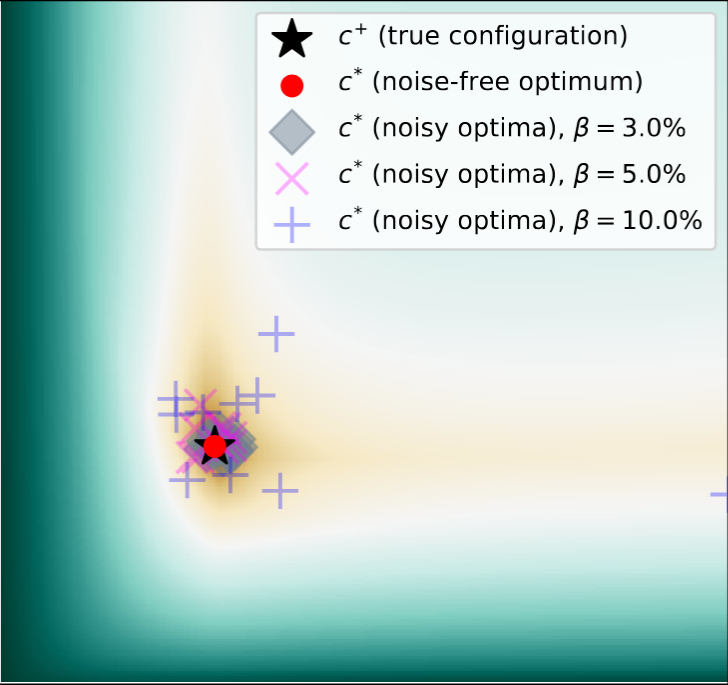
My own research covers two main topics, which I expand upon above. There are two common themes in both topics, though, and they can at times complement one another. First, these methods focus on problem settings where the numerical performance achieved by a model may not tell the full story, or perhaps even be downright misleading. A model could perform basically perfectly on unseen validation data, and yet fail completely at its task (I hope these failure modes will become apparent in the detailed explanation below). Second, I keep finding myself drawn to EO problem settings, where the applications are impactful and exciting, and the limitations of conventional machine learning truly become clear.
Research groups
My research is embedded within the following groups:
- ADA research group @ LIACS: The ADA research group (whose acronym is enigmatic, but is often expanded as “Automated Design of Algorithms”) strongly advocates AI that complements, rather than replaces, human abilities. The group performs AI research with a focus on reliability, robustness and efficiency, and is distributed over two institutes: LIACS (Leiden University) in the Netherlands, and AIM (RWTH Aachen University) in Germany.
- AutoAI4EO: AutoAI4EO is the subset of the ADA research group working with Earth observation (EO) data.
- STAR @ LIACS: STAR (spatio-temporal data analysis and reasoning) is a larger subset of the ADA group that includes members and visitors working with spatio-temporal data. This includes the EO data we work with in AutoAI4EO, but also data sources such as trajectory data (e.g., GPS) or time-series data (e.g., from wearable sensors). We also often organise teaching through the STAR group.